

Spaying and Neutering Cats: Benefits, Timing & What to Expect
Whether you've just welcomed a playful kitten into your home or adopted an adult cat, one of the most important decisions you'll make about their care is whether and when to have them spayed or neutered.
You've probably heard that spaying and neutering help prevent unwanted kittens, but there's much more to these common veterinary procedures. They can offer important health benefits, reduce certain hormone-driven behaviors, and help address the challenges of cat overpopulation.
Of course, surgery is still surgery, and it's natural to have questions. What exactly happens during the procedure? When should it be done? Will your cat's personality change? And what should you expect during recovery?
Here's what cat owners should know about spaying and neutering, from the benefits and possible risks to helping your kitty recover comfortably.
What Is the Difference Between Spaying and Neutering a Cat?
Both procedures prevent cats from reproducing, but they involve different surgical techniques.
What Is Spaying?
Spaying is a surgical procedure performed on female cats. Depending on the veterinarian's technique, it involves removing the ovaries alone or both the ovaries and uterus.
Spaying prevents pregnancy and stops the reproductive hormone cycles associated with going into heat.
It also eliminates the risk of certain reproductive diseases involving the removed organs.
What Is Neutering?
Neutering, sometimes called castration, is the surgical removal of a male cat's testicles.
The procedure prevents the cat from fathering kittens and substantially reduces testosterone production. This can decrease certain behaviors associated with mating, including urine marking, roaming, and competition with other males.
Although the term neutering is sometimes used broadly for sterilization in both sexes, cat owners commonly use spaying for females and neutering for males.
Why Is Spaying and Neutering Important?
Spaying and neutering are widely recommended for cats that aren't intended for responsible breeding. The benefits extend beyond preventing pregnancy and can affect both individual pets and the wider community.
1. Helps Prevent Unwanted Litters
Cats can become reproductively mature surprisingly young, and an unspayed female may become pregnant during her first heat cycle.
Preventing unplanned litters reduces the number of kittens needing homes and helps animal shelters and rescue organizations manage the demands of caring for homeless cats.
Even indoor cats can occasionally escape through an open door or damaged window screen. Spaying or neutering prevents an unexpected encounter from resulting in kittens.
2. Reduces Certain Health Risks in Female Cats
Spaying eliminates the possibility of uterine infection known as pyometra when the uterus is removed. It also prevents ovarian disease when the ovaries are removed.
Spaying before the first heat cycle is associated with a substantial reduction in the risk of mammary tumors, which are often malignant in cats.
The degree of protection depends on factors such as age at surgery and individual health. Your veterinarian can explain how these benefits apply to your cat.
3. Eliminates the Risk of Testicular Cancer in Male Cats
Because neutering removes the testicles, it eliminates the possibility of testicular cancer developing in those organs.
Neutering may also reduce behaviors that increase a cat's exposure to injuries or infectious diseases, particularly roaming and fighting.
However, it doesn't directly prevent every infectious disease or guarantee that a cat will remain healthy. Vaccination, preventive veterinary care, and a safe environment are still essential.
4. May Reduce Spraying and Urine Marking
Intact male cats are more likely to engage in hormone-related urine marking, particularly when competing for territory or mates.
Neutering often reduces this behavior, especially when performed before spraying becomes an established habit.
However, neutered cats can still spray because of stress, territorial conflicts, or medical problems. Spaying and neutering aren't guaranteed cures for every litter box issue.
If your cat begins urinating outside the box, don't automatically assume it's a behavioral problem. Consult your veterinarian and review your litter box setup. Our guide to how many litter boxes your cats need explains why accessible, clean boxes matter in multi-cat homes.
5. May Reduce Roaming and Fighting
Unneutered male cats may travel considerable distances in search of mates and compete with other males. These behaviors can increase the risk of injuries, traffic accidents, and exposure to infectious diseases.
Neutering often reduces the hormonal drive behind roaming and some types of fighting.
But it doesn't eliminate every territorial behavior or make outdoor roaming safe. Keeping cats indoors or providing a secure outdoor enclosure remains an important safety precaution.
6. Helps Reduce Cat Overpopulation
Animal shelters and rescue organizations care for large numbers of cats and kittens every year. Preventing unplanned litters helps reduce the number of animals competing for limited homes and rescue resources.
Spaying and neutering are especially important for community cat programs, where sterilization helps prevent additional litters.
For pet owners, choosing to sterilize a cat that won't be bred responsibly is one practical way to support feline welfare beyond their own household.
When Should You Spay or Neuter a Kitten?
Many veterinary organizations support sterilizing cats by approximately five months of age, before they reach reproductive maturity. However, the best timing for an individual kitten depends on their health, development, weight, and circumstances.
Animal shelters may perform these procedures at younger ages when kittens meet appropriate medical criteria and are cared for under established veterinary protocols.
Talk with your veterinarian early in your kitten's life rather than waiting until signs of sexual maturity appear.
Can Adult or Senior Cats Be Spayed or Neutered?
Yes. Adult cats can often be spayed or neutered, including cats adopted later in life.
Older cats or cats with underlying health conditions may need additional evaluation, bloodwork, or adjustments to their anesthesia and recovery plans.
Age alone doesn't automatically rule out surgery, but it does make an individualized veterinary assessment especially important.
Should a Female Cat Have One Litter Before Being Spayed?
No. There's no established health benefit to allowing a female cat to have a litter before spaying.
In fact, waiting until after a heat cycle or pregnancy can mean missing some of the protective benefits associated with earlier sterilization.
If your cat is already pregnant, nursing kittens, or currently in heat, ask your veterinarian about the appropriate options and timing.
Is Spaying or Neutering Safe for Cats?
Spaying and neutering are common veterinary procedures, and most healthy cats recover without serious complications. However, both involve anesthesia and surgery, so there are risks.
Potential complications include bleeding, infection, adverse reactions to anesthesia, or problems with incision healing.
Your veterinarian will evaluate your cat's health and explain the recommended anesthesia, pain management, and monitoring plan. Follow any instructions about fasting, medications, and preparation carefully.
For a broader explanation of veterinary procedures and recovery, read our comprehensive guide to cat surgery.
What Happens During Spay or Neuter Surgery?
Before surgery, your veterinary team will assess your cat and review the procedure. Your cat will receive anesthesia and appropriate pain management.
Spaying generally involves an abdominal incision, although techniques and approaches vary. Neutering a male cat usually involves smaller incisions in the scrotal area.
The veterinary team monitors your cat during anesthesia and recovery. Many cats go home the same day, although some circumstances require additional observation or hospitalization.
Ask your veterinarian what to expect for your particular cat, including when they can eat, how to give medications, and whether they need a protective collar or recovery garment.
How Long Does It Take a Cat to Recover From Spaying or Neutering?
Recovery time varies according to the procedure, your cat's age and health, and the veterinarian's instructions.
Male cats often recover from routine neutering relatively quickly, while female cats generally require a longer period of activity restriction because spaying involves abdominal surgery.
Even if your cat seems energetic the next day, the incision still needs time to heal. Your veterinarian may recommend limiting jumping, running, and rough play for approximately 10 to 14 days, or for another period appropriate to the procedure.
Follow the discharge instructions rather than relying on a general timeline.
How to Care for Your Cat After Spay or Neuter Surgery
Prepare a Quiet Recovery Area
Set up a comfortable, warm resting area away from household commotion and other pets. Your cat should have easy access to water, an appropriate litter box, and a place to rest without climbing or jumping.
If your veterinarian recommends restricting activity, follow those instructions even if your kitty seems ready to resume normal play.
Monitor the Incision
Check the incision as directed by your veterinarian. Watch for increasing redness, swelling, discharge, bleeding, or an incision that begins to open.
Don't apply ointments, disinfectants, or other products unless your veterinarian specifically instructs you to do so.
Prevent Licking and Chewing
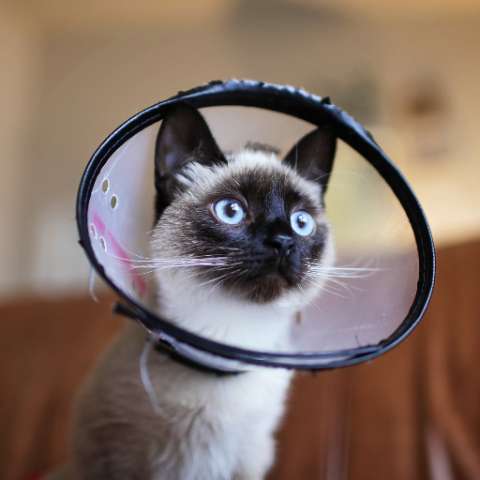
Some cats need an Elizabethan collar or veterinarian-approved recovery garment to prevent them from licking or chewing the incision.
Although your kitty may not appreciate their temporary fashion accessory, protecting the surgical site can help prevent complications.
Give Medications Exactly as Prescribed
Administer pain medication or other prescribed treatments according to your veterinarian's directions.
Never give human pain relievers such as acetaminophen or ibuprofen to a cat. These medications can be extremely dangerous.
If giving medication is difficult, our article Giving Your Cat Medicine: It Can Be Done! offers practical preparation tips. Always follow your veterinarian's instructions for the specific medication.
Watch Eating, Drinking, and Bathroom Habits
Your cat may be quieter or have a reduced appetite immediately after anesthesia, but follow your veterinarian's guidance about what is expected and when to call.
Contact your veterinary team if your cat refuses food beyond the period they advised, repeatedly vomits, seems unusually weak, or has difficulty urinating.
Difficulty breathing, collapse, uncontrolled bleeding, or inability to urinate requires urgent veterinary attention.
Will Spaying or Neutering Change My Cat's Personality?
Spaying or neutering doesn't fundamentally change who your cat is. A playful, affectionate, or independent kitty will generally retain their familiar personality.
What may change are behaviors influenced by reproductive hormones, such as persistent calling during heat, roaming in search of mates, or certain types of urine marking.
Other behaviors, including fear, territorial stress, and established habits, may require additional attention regardless of sterilization status.
Will My Cat Gain Weight After Being Spayed or Neutered?
Spaying or neutering can change a cat's energy requirements and appetite, which may increase the risk of weight gain if food intake isn't adjusted appropriately.
However, weight gain isn't inevitable.
Ask your veterinarian about suitable portions, maintaining a healthy body condition, and age-appropriate play and exercise once your cat has recovered.
How Much Does It Cost to Spay or Neuter a Cat?
Costs vary considerably based on location, the veterinary practice, the procedure, and the services included.
Some shelters, humane societies, and community programs offer reduced-cost spay and neuter services. Ask whether the quoted price includes an examination, anesthesia, pain medication, monitoring, and follow-up care.
If cost is a concern, your veterinarian or local animal shelter may be able to suggest available assistance programs.
Supporting Cats and the People Who Love Them
Spaying and neutering help reduce unplanned litters and support the work of animal shelters and rescue organizations. Adopting responsibly, keeping identification current, and supporting local rescue efforts are other meaningful ways to make a difference.
If you're shopping for a fellow cat lover, Happy Little Kitty's cat-themed greeting cards are a fun way to celebrate a new adoption, thank a devoted pet sitter, or brighten someone's day. For everyday feline personality, explore our cat stickers and Home & Kitchen collection.
These gifts celebrate the people who love cats; they aren't veterinary supplies or substitutes for professional care.
Frequently Asked Questions About Spaying and Neutering Cats
What is the best age to spay or neuter a cat?
Many veterinary organizations recommend sterilization by approximately five months of age for cats not intended for breeding. Your veterinarian can advise on the appropriate timing for your kitten.
Can a cat be spayed while in heat?
It may be possible, but surgery during heat can involve additional considerations. Ask your veterinarian whether to proceed or schedule the procedure at another time.
Do indoor cats need to be spayed or neutered?
Spaying and neutering can provide health and behavioral benefits even for cats that live exclusively indoors. It also prevents pregnancy if an indoor cat unexpectedly escapes.
Will neutering stop my male cat from spraying?
Neutering often reduces hormone-driven spraying, but it doesn't guarantee that marking will stop. Stress, territorial issues, and medical conditions can also contribute.
How long should a cat wear a cone after surgery?
Follow your veterinarian's instructions. Some cats need a protective collar or recovery garment until the incision has healed sufficiently, which may take around 10 to 14 days depending on the procedure.
Can my cat jump after being spayed?
Jumping and vigorous activity may interfere with healing. Follow your veterinarian's activity restrictions, even if your cat appears energetic.
Do cats need pain medication after spaying or neutering?
Veterinarians use appropriate pain management during and after surgery. Your cat may receive medication at the clinic, at home, or both. Never substitute human pain medication.
Is it too late to neuter an adult cat?
Not necessarily. Many adult cats can undergo sterilization safely after an appropriate veterinary assessment.
Can spaying and neutering help cats live longer?
Studies have found associations between sterilization and longer lifespans in pet cats, but individual outcomes depend on many factors, including overall health, environment, and veterinary care. Surgery doesn't guarantee a longer life.
A Healthier Future for Your Cat and the Cat Community
Spaying and neutering are about more than preventing kittens. These procedures can offer meaningful health benefits, reduce certain hormone-related behaviors, and help ease the burden of cat overpopulation.
Every cat is different, so the best next step is a conversation with your veterinarian about timing, health considerations, and recovery. With thoughtful planning and proper aftercare, you can make an informed decision that supports your kitty's well-being for years to come.
Leave a comment