

How to Get Rid of Fleas on Cats and Keep Them Flea-Free
There's nothing quite like watching your cat curl up for a peaceful nap, until you notice them suddenly scratching, biting at their fur, or grooming the same spot over and over again. Could fleas be the culprit?
Unfortunately, fleas aren't just an outdoor cat problem. Even cats who spend their entire lives indoors can encounter these tiny parasites, and once fleas find their way into your home, getting rid of them can take patience and a consistent plan.
The good news is that effective flea prevention and treatment options are available. Understanding how fleas spread, recognizing the warning signs, and choosing safe products can help keep your feline family comfortable.
Here's what every cat parent should know about getting rid of fleas on cats, treating an infestation, and preventing those unwelcome little visitors from returning.
How Do Cats Get Fleas?
Fleas are small, wingless parasites that feed on blood. The most common flea found on domestic cats is the cat flea, Ctenocephalides felis.
Despite the name, cat fleas can also infest dogs and other animals.
Cats can encounter fleas through contact with infested animals or environments where fleas are present. Fleas may enter a home on another pet, through contact with wildlife, or from an existing infestation in the surrounding environment.
Once adult fleas reach a suitable host, they feed and reproduce. Their eggs can fall into carpeting, bedding, furniture, and other areas where pets spend time.
That's why treating only the fleas you can see on your cat may not be enough to eliminate an established infestation.
Can Indoor Cats Get Fleas?
Absolutely. Living indoors reduces certain exposure risks, but it doesn't make a cat completely immune to fleas.
Fleas can enter homes through other pets, infested environments, or animals that have access to the building.
A newly adopted pet or a visiting animal may also introduce fleas into a household.
Even cats who never venture outside can develop flea infestations under the right circumstances.
If you have multiple cats, it's especially important to consider the entire household when discussing flea prevention with your veterinarian.
How to Tell if Your Cat Has Fleas
Some cats scratch frequently when they have fleas, while others show surprisingly few obvious symptoms.
Here are several signs worth investigating.
1. Frequent Scratching or Biting at the Skin
Flea bites can cause irritation and itching.
You may notice your cat scratching around the neck, grooming their belly repeatedly, or biting at the base of their tail.
However, itching can also be caused by allergies, infections, and other skin conditions.
2. Flea Dirt in Your Cat's Fur
Flea dirt is the waste produced by fleas after feeding on blood.
It often resembles tiny black or dark brown specks, particularly around the base of the tail, lower back, and neck.
To help distinguish flea dirt from ordinary debris, place a few specks on a damp white paper towel.
Flea dirt may dissolve into reddish-brown marks because it contains digested blood.
This can be a useful clue, but it isn't a substitute for veterinary evaluation when your cat has persistent symptoms.
3. Excessive Grooming or Hair Loss
Some cats respond to flea irritation by licking or chewing their fur excessively.
This can lead to thinning hair, bald patches, or irritated skin.
Cats with flea allergy dermatitis may develop intense itching after relatively few flea bites.
4. Red Bumps, Scabs, or Skin Irritation
Small scabs, redness, and inflamed skin can occur when a cat reacts to flea bites.
If your cat develops sores, open wounds, or significant discomfort, contact your veterinarian.
5. Visible Fleas
Adult fleas are small, dark insects that move quickly through fur.
They're often difficult to spot, particularly on cats with thick coats or cats who groom frequently.
Not seeing fleas doesn't necessarily mean your cat is flea-free.
For other changes in appearance or behavior that may indicate illness, read our guide to early warning signs that your cat may be sick.
How to Check Your Cat for Fleas With a Flea Comb
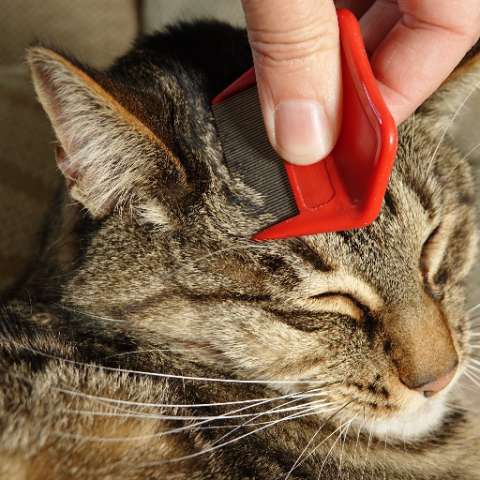
A flea comb has closely spaced teeth designed to catch fleas and flea dirt as it moves through your cat's coat.
Choose a quiet location and gently comb through the fur, paying particular attention to the neck, lower back, and base of the tail.
Inspect the comb frequently for insects or dark debris.
Have a container of soapy water nearby to dispose of any fleas collected on the comb, keeping the container safely away from your cat.
Work gently and stop if your cat becomes distressed.
A flea comb can help detect fleas and remove some adult fleas, but it isn't a complete treatment for an infestation.
Why Are Fleas Dangerous for Cats?
Fleas are more than a minor annoyance. In some circumstances, they can contribute to significant health problems.
Flea Allergy Dermatitis
Some cats develop an allergic reaction to proteins in flea saliva.
These cats may experience intense itching, hair loss, scabs, and skin inflammation after only a small number of bites.
Veterinary treatment may be necessary to control the irritation and address secondary skin problems.
Anemia From Heavy Flea Infestations
Fleas feed on blood, and severe infestations can cause anemia, particularly in young kittens or medically vulnerable cats.
Signs may include weakness, lethargy, pale gums, and rapid breathing.
A kitten or cat showing these symptoms needs prompt veterinary attention.
Tapeworm Transmission
Cats can acquire certain tapeworm infections by swallowing an infected flea during grooming.
That's one reason veterinarians may recommend evaluating a cat for intestinal parasites when fleas are discovered.
Flea treatment and appropriate parasite control may both be necessary.
Skin Infections and Discomfort
Repeated scratching and biting can damage the skin, creating opportunities for secondary infections.
Contact your veterinarian if your cat has persistent itching, open sores, hair loss, or signs of pain.
How to Get Rid of Fleas on Cats Safely
Successful flea treatment usually involves two connected goals: treating the affected pets and reducing the flea population in the surrounding environment.
Step 1: Contact Your Veterinarian About Appropriate Flea Treatment
Ask your veterinarian which flea-control product is appropriate for your cat's age, weight, health, and lifestyle.
Cat-approved flea treatments are available in several forms, including topical and oral medications.
Different products work in different ways, and their dosing schedules and parasite coverage vary.
Don't assume every product sold for flea control is suitable for your cat.
Step 2: Follow the Product Instructions Exactly
Use only products specifically approved or prescribed for your cat.
Follow the directions for dose, application, treatment interval, and any precautions involving other household pets.
Never apply a product intended for dogs to a cat unless a veterinarian has specifically confirmed that the particular product is appropriate.
Some dog flea treatments contain permethrin, which can cause severe poisoning in cats.
If your cat has been exposed to a dog flea product containing permethrin, seek emergency veterinary guidance immediately.
Step 3: Address Every Pet in the Household
If one cat has fleas, other pets in the home may also be exposed.
Your veterinarian can recommend appropriate flea control for each animal.
Dogs and cats may require different products, and medication should never be shared between pets unless explicitly directed by a veterinarian.
In multi-pet households, treating only one affected animal may allow fleas to continue reproducing.
Step 4: Clean the Areas Where Your Pets Spend Time
Vacuum carpeting, rugs, upholstered furniture, and other suitable surfaces regularly.
Pay attention to areas where your cat sleeps, lounges, and grooms.
Wash washable pet bedding according to its care instructions.
Dispose of vacuum contents promptly in a sealed container or bag, following your vacuum manufacturer's recommendations.
Cleaning helps reduce flea eggs, larvae, and other material in the environment, but it generally works best alongside effective veterinary flea treatment.
Step 5: Continue Treatment as Directed
Don't assume the infestation has disappeared simply because you no longer see adult fleas.
Immature flea stages may remain in the environment and develop into adults over time.
Continue the flea-control program for the period recommended by your veterinarian.
How Long Does It Take to Get Rid of Fleas?
The timeline depends on the extent of the infestation, the products used, environmental conditions, and whether all exposed pets are appropriately treated.
Some flea medications begin killing adult fleas relatively quickly, but an established household infestation may take weeks or longer to resolve.
Flea pupae can remain protected within cocoons before emerging as adults, which helps explain why new fleas may appear after treatment begins.
Consistent treatment and environmental cleaning are important throughout this period.
If fleas continue appearing despite following your veterinarian's instructions, ask whether the treatment plan needs adjustment.
How to Get Rid of Fleas in Your House
When fleas become established indoors, much of the flea population may be present as eggs, larvae, or pupae rather than adult fleas living on your cat.
Focus your cleaning efforts on areas where pets spend the most time.
Vacuum Carpets and Rugs
Vacuum suitable flooring and upholstery thoroughly, paying attention to edges, furniture, and resting areas.
Repeat vacuuming regularly during the treatment period.
Wash Pet Bedding
Wash washable bedding and other appropriate fabrics according to their care labels.
Use the recommended washing and drying settings for the material.
Clean Pet Resting Areas
Inspect favorite sleeping spots, cat trees, and washable surfaces.
Clean each item using methods appropriate for its materials.
For more ideas about creating comfortable resting and activity spaces, explore our guide to creating a cat-friendly home.
Ask About Professional Treatment if Necessary
Severe infestations may require additional environmental treatment.
Consult your veterinarian or a qualified pest-control professional about options appropriate for a home with cats.
Follow all product instructions and pet reentry precautions.
Never use outdoor pesticides or household insecticides directly on your cat.
Are Natural Flea Remedies Safe for Cats?
It's understandable to look for a natural solution when you're concerned about using chemicals around your pets.
However, natural doesn't automatically mean safe.
Some essential oils, concentrated plant extracts, and homemade flea sprays can be toxic or irritating to cats.
Tea tree oil and certain other essential oils are especially concerning.
Garlic should never be given to cats as a flea remedy. It can cause serious toxicity.
Dish soap baths, vinegar sprays, and other home remedies aren't reliable substitutes for veterinarian-recommended flea prevention.
Before using any product on your cat, ask your veterinarian whether it's appropriate.
Curious cats may also lick or chew household objects, so keep concentrated oils, cleaners, and pest-control products securely stored.
Our guide to preventing unsafe chewing in cats
Can You Give a Cat a Bath to Remove Fleas?
Bathing may remove some fleas under certain circumstances, but it isn't generally a complete treatment for flea infestation.
Many cats find baths stressful, and inappropriate shampoos can irritate their skin or cause toxicity.
Don't use dog flea shampoo or other products that haven't been confirmed safe for cats.
If your veterinarian recommends bathing, follow their instructions about the appropriate product, water temperature, and drying process.
For kittens, senior cats, and cats with medical conditions, professional guidance is particularly important.
Can Fleas Live in Carpet and Furniture?
Yes. Flea eggs can fall from an infested animal into carpets, furniture, bedding, and other areas.
Larvae may develop in protected places where they can feed on organic debris.
Pupae may remain in their cocoons until environmental conditions encourage adult fleas to emerge.
That's why household cleaning is an important part of controlling an established flea infestation.
It also explains why seeing another flea shortly after beginning treatment doesn't necessarily mean the medication has failed.
Do Cats Need Flea Prevention During Winter?
Depending on your climate and household environment, fleas may remain a concern throughout the year.
Heated indoor spaces can provide suitable conditions for fleas even when outdoor temperatures are cold.
Your veterinarian can recommend whether year-round flea prevention is appropriate for your cat.
Don't stop or change prescribed parasite prevention solely because the weather has cooled.
How to Protect Cats From Fleas During Outdoor Adventures
Cats who spend time outdoors may encounter environments where fleas and other parasites are present.
Use veterinarian-recommended flea prevention and inspect your cat's coat regularly.
If your cat enjoys supervised walks, check their harness and carrier before every outing.
Our guide to harness training your cat
Flea prevention doesn't replace identification and escape precautions. Make sure your cat's microchip registration is current, especially before travel.
Our guide to microchipping cats
What Should You Do About Fleas When Traveling With Cats?
If you're traveling with your cat, discuss appropriate parasite prevention with your veterinarian before departure.
Different destinations may involve different exposure risks.
Inspect your cat's carrier and bedding, and avoid placing your pet in areas where you suspect an active flea infestation.
Keep your veterinarian's contact information and your cat's medication details accessible.
For the humans planning a getaway, our Cat Travel Bundle
Explore our Cat Travel Accessories Collection for more feline-inspired travel essentials designed for people.
These accessories are not flea-control products or substitutes for appropriate pet identification.
How to Prepare a Cat Sitter for Flea Prevention
If someone will be caring for your cats while you're away, include flea-prevention instructions in their pet-care information.
Provide the product name, dosing schedule, and your veterinarian's contact information.
Make it clear that a sitter should never administer an additional flea treatment without your instructions and veterinary guidance.
If your cats have different medications or schedules, keep individual records for each pet.
Our guide to choosing a cat sitter
Keeping Your Home Comfortable During Flea Treatment
Dealing with fleas can mean more vacuuming, extra laundry, and a little more household organization than usual.
Keep pet bedding, cleaning supplies, and medication records organized so you can maintain a consistent routine.
Store flea medications securely and separately from human medications or household cleaning products.
For ordinary kitchen cleaning, our Keep Things Clean Cat Kitchen Sponges
These sponges are intended for kitchen use, not for applying pesticides, cleaning flea-contaminated pet bedding, or bathing cats.
And once your cats are comfortable and your home is back to normal, our Cat Clothespin Photo Holder Set
For another decorative accent, the Cat Curtain Hooks
These decorations are intended for human living spaces and have no flea-repellent or flea-treatment properties.
Cat-Themed Accessories for Everyday Errands
When you're managing veterinary appointments, household supplies, and everything else that comes with caring for cats, a few small accessories can make your own routine a little more enjoyable.
Our Cat Ear Insulated Water Bottle
The Drink Coffee, Pet Cats Makeup Bag
For keys, the Cat Key CoverRhinestone Cat Keychain
These are accessories for people, not veterinary supplies or flea-prevention equipment.
Thoughtful Gifts for Cat Lovers
Whether you're thanking someone who helped care for your cats or surprising a friend who adores their own feline family, a small cat-themed gift can be a thoughtful gesture.
Explore our Cat Jewelry Collection for additional styles.
For affordable surprises, browse our Cat Gifts Under $5 and Cat Gifts Under $10 collections.
Our Sale Collection features discounted cat-themed merchandise, while the Ships Same Day Collection
Same-day shipping refers to eligible order dispatch, not guaranteed same-day delivery.
Frequently Asked Questions About Fleas on Cats
How do I know if my cat has fleas?
Common signs include scratching, excessive grooming, flea dirt, irritated skin, and sometimes visible fleas. A flea comb can help you examine your cat's coat.
Can indoor cats get fleas?
Yes. Fleas can enter homes through other pets, infested environments, and various routes of exposure, even when a cat never goes outside.
What is the fastest way to get rid of fleas on cats?
Ask your veterinarian about an effective cat-approved flea treatment. Different medications begin working at different rates, and household cleaning may also be necessary.
Can I use dog flea medicine on my cat?
No. Never apply a dog flea treatment to a cat unless your veterinarian has specifically confirmed that the product is appropriate. Permethrin-containing dog treatments can be life-threatening to cats.
Are essential oils safe for flea prevention?
Don't apply essential oils or homemade essential-oil sprays to your cat. Some oils are toxic to cats, and these remedies aren't reliable substitutes for veterinarian-recommended flea control.
Can I get rid of cat fleas with vinegar?
Vinegar isn't a reliable treatment for flea infestations. Use veterinary guidance and products approved for your cat.
Do flea combs work?
Flea combs can help detect fleas and remove some adults from the coat. They don't eliminate all flea life stages or replace effective flea treatment.
How long do fleas live in carpet?
Flea development varies with temperature, humidity, and other environmental conditions. Eggs, larvae, and pupae may remain in the environment while an infestation is being treated.
How often should I vacuum during a flea infestation?
Regular, thorough vacuuming can help reduce flea material in carpets and upholstery. Follow your veterinarian's environmental treatment recommendations.
Do I need to treat all my cats for fleas?
Your veterinarian may recommend appropriate treatment for every exposed pet. Products and doses must be selected individually for each animal.
Can fleas make kittens sick?
Yes. Heavy flea infestations can cause dangerous blood loss and anemia in kittens. Weakness, pale gums, or lethargy require prompt veterinary care.
Can fleas cause tapeworms in cats?
Yes. Cats can acquire certain tapeworms by swallowing infected fleas during grooming. Ask your veterinarian whether parasite testing or treatment is needed.
Why is my cat still scratching after flea treatment?
Skin irritation may persist after fleas are treated, and other conditions can also cause itching. Contact your veterinarian if symptoms continue or worsen.
Do cats need flea prevention in winter?
Fleas may remain active in heated indoor environments. Your veterinarian can recommend an appropriate prevention schedule for your cat and location.
Can fleas cause hair loss in cats?
Yes. Flea irritation and flea allergy dermatitis can cause excessive grooming, hair loss, and skin inflammation. Our guide to warning signs of illness in cats
Should I treat my cat for fleas before traveling?
Discuss parasite prevention with your veterinarian before travel, especially when visiting unfamiliar environments. Our harness training guide
What information should I leave with a cat sitter?
Provide medication instructions, veterinary contact details, and your cats' usual routines. Our cat sitter guide
Can fleas spread between cats and dogs?
Yes. Cat fleas can infest both cats and dogs. Ask your veterinarian about species-appropriate flea prevention for every pet in the household.
What if my cat licks flea medication?
Contact your veterinarian or an animal poison-control service for advice, particularly if your cat develops drooling, vomiting, tremors, or other symptoms. Keep the product packaging available.
Can flea treatments cause side effects?
Yes. Possible effects depend on the medication and individual cat. Contact your veterinarian if you notice an unexpected reaction, and seek emergency care for serious symptoms.
How can I organize my cat's flea-prevention schedule?
Keep medication dates and veterinary instructions in a calendar or pet-care record. Consistency is important, but never give an extra dose to compensate for uncertainty without veterinary advice.
What are useful accessories for cat lovers who travel?
Our Cat Travel Bundle pairs a passport cover with a luggage tag for personal belongings. It's designed for human travel, not pet identification or flea prevention.
Where can I find small gifts for cat lovers?
Browse our Cat Gifts Under $5, Cat Gifts Under $10, and Sale Collection.
Do you have stocked cat-themed accessories?
Yes. Our Ships Same Day Collection includes eligible stocked merchandise for prompt dispatch. Delivery timing depends on the carrier and destination.
Keep Your Cat Comfortable and Your Home Flea-Free
Fleas may be tiny, but they can cause plenty of discomfort for cats and frustration for the people who love them.
The most effective approach combines appropriate veterinary flea prevention, careful treatment of affected pets, and consistent cleaning of the areas where your cats spend time.
Remember that even indoor cats can encounter fleas, and an established infestation may take time to resolve. Avoid unsafe home remedies, never use dog flea medications on cats without veterinary approval, and seek professional guidance whenever your kitty develops significant itching or other symptoms.
Once your feline family is comfortable and your home is back to normal, you can return to the more enjoyable parts of cat ownership, from peaceful afternoon naps to enthusiastic head bumps and purring companions.
And for a little feline personality in your own everyday routine, explore Happy Little Kitty's Home & Kitchen Collection and Ships Same Day Collection.
A healthy, comfortable cat is always worth the extra effort, especially when the reward is another happy day together.
Leave a comment